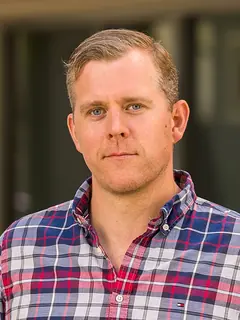
- Researcher, Google DeepMind1
- Adjunct Professor in Symbolic Systems, Stanford University1
Douwe Kiela is a researcher at Google DeepMind and an Adjunct Professor in Symbolic Systems at Stanford University. Kiela co-founded Contextual AI and was its CEO, and earlier was Head of Research at Hugging Face and a Research Scientist at Facebook AI Research. Kiela's site describes research on retrieval-augmented, grounded, and multi-agent language understanding and on tools for evaluation and benchmarking; Kiela is an author of the 2020 paper that introduced retrieval-augmented generation (RAG), first author of the Dynabench paper on dynamic dataset creation and benchmarking, and a co-author of the paper on the OLMoE open mixture-of-experts models.1234
At a glance
- Current roles
- Researcher +1 more
- Companies
- Google DeepMind, Stanford University
- Sector
- Company
- Education
- Stanford, Cambridge
- Work listed
- 3
- Sources cited
- 8
- Profile reviewed
Career
Douwe Kiela's homepage lists a research position at Google DeepMind and an adjunct professorship in Symbolic Systems at Stanford University. Kiela co-founded Contextual AI and served as its CEO; before that Kiela was Head of Research at Hugging Face and, earlier, a Research Scientist at Facebook AI Research.1
Research
Kiela's research covers machine learning and natural language processing, with a focus on grounded, multi-agent, and retrieval-augmented language understanding and on better tools for evaluation and benchmarking. Kiela co-authored the 2017 InferSent paper on learning general-purpose sentence representations from natural language inference data.15
Much of Kiela's work concerns how models are tested. Kiela was a co-author of Adversarial NLI (2019), a benchmark collected through an iterative human-and-model-in-the-loop process, first author of the Hateful Memes Challenge (2020) for multimodal classification, and first author of Dynabench (2021), a platform for dynamic dataset creation and benchmarking.673
Kiela was also an author of the May 2020 paper that introduced retrieval-augmented generation, which pairs a pre-trained language model with a retrievable non-parametric memory. Later work includes KTO (2024), an alignment method based on prospect theory, and OLMoE (2024), a family of open mixture-of-experts language models.284
Work and contributions
OLMoE Open weights
Co-author of "OLMoE: Open Mixture-of-Experts Language Models" (2024); the abstract says the team open-sourced the model weights, training data, code, and logs.4
Retrieval-Augmented Generation (RAG) Published research
Co-author of "Retrieval-Augmented Generation for Knowledge-Intensive NLP Tasks" (2020), which combined pre-trained language models with an explicit non-parametric memory for knowledge-intensive tasks.2
Dynabench Published research
First author of "Dynabench: Rethinking Benchmarking in NLP" (2021), which introduced an open-source platform for human-and-model-in-the-loop dataset creation and model benchmarking.3
Timeline
- Co-authored the InferSent paper on universal sentence representations from inference data.5
- Co-authored Adversarial NLI, a benchmark for natural language understanding.6
- Released the Hateful Memes Challenge paper as first author.7
- Co-authored the paper introducing retrieval-augmented generation (RAG).2
- Released Dynabench, Rethinking Benchmarking in NLP, as first author.3
- Co-authored KTO, a model alignment method framed through prospect theory.8
- Co-authored OLMoE, Open Mixture-of-Experts Language Models.4
Other documented roles
Roles the sources document that are not confirmed as current.
- Co-founder and CEO, Contextual AI1
- Head of Research, Hugging Face1
- Research Scientist, Facebook AI Research (Meta)1
Where they work
- Google DeepMind 64 people in the wiki
- Stanford University 40 people in the wiki
Related people
- João CarreiraAlso at Google DeepMind
- Sahil DuaAlso at Google DeepMind
- Dani YogatamaAlso at Google DeepMind
- Nicholas CarliniAlso at Google DeepMind
- Gabe PereyraAlso at Google DeepMind
- Mark ChenLanguage models · Multimodal models
- Nanyun (Violet) PengLanguage models · Multimodal models
- Mira MuratiLanguage models · Multimodal models
- Swabha SwayamdiptaEvaluation and benchmarks · Language models
- Akshita BhagiaLanguage models · Evaluation and benchmarks
Suggest a correction or removal
Profiles cover public professional work only, and each statement cites a source. If something is out of date, missing or wrong, tell us and link a source. People can also ask for their profile to be corrected or removed.
References
8 sources · profile reviewed Oct 21, 2026 · data updated Oct 21, 2026
- Douwe Kiela — homepage
- Retrieval-Augmented Generation for Knowledge-Intensive NLP Tasks (arXiv 2005.11401)
- Dynabench: Rethinking Benchmarking in NLP (arXiv 2104.14337)
- OLMoE: Open Mixture-of-Experts Language Models (arXiv 2409.02060)
- Supervised Learning of Universal Sentence Representations from Natural Language Inference Data
- Adversarial NLI: A New Benchmark for Natural Language Understanding
- The Hateful Memes Challenge: Detecting Hate Speech in Multimodal Memes
- KTO: Model Alignment as Prospect Theoretic Optimization